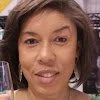
Moving from the tropical climate of Ghana to the frigid winters of Michigan was a profound culture shock for Samuel. Not only did he have to adjust to the weather, but also to a culture that felt far more individualistic than the one he had always known.
In Ghana, community is woven into everyday life. Everyone is treated like family—there are no distinctions between cousins, stepbrothers, or stepsisters; they are simply brothers and sisters. Having grown up in such a close-knit environment, the transition was especially difficult.
The loneliness was felt most deeply during the Christmas season. Instead of being surrounded by the warmth of family and lifelong traditions, Samuel found himself surrounded by snow, isolated from the people he loved. Those first two years in Michigan were among the most challenging of his immigrant journey.
Transcript: A Conversation with Samuel Agyeman
Accentuate! Podcast
Host: Rhonda Gardner
Guest: Samuel Agyeman
This transcript has been lightly edited for clarity and readability. Repeated words, filler, and brief acknowledgments have been removed while preserving the conversation’s meaning. Bracketed notes indicate wording that could not be resolved from the supplied transcript. References to employment, immigration experiences, future plans, and sporting events reflect the time of the interview.
Introducing Samuel
Rhonda: Hello, everyone. This is the Accentuate! Podcast, amplifying the voices of immigrants and refugees for success in the workplace. I’m Rhonda Gardner, the host, an immigrant from Trinidad and Tobago living in the US. Today, my guest is Samuel Agyeman.
Samuel and I worked at the same organization a few years ago. I was leading the internship program, and he was one of the interns. [A brief phrase in the introduction is unclear.] We have remained connected on LinkedIn. Samuel, thank you so much for agreeing to speak with me today.
Samuel: You’re welcome, Rhonda. It’s good to see you.
Rhonda: Thank you. Tell me, where are you originally from?
Samuel: I’m originally from Ghana, born and raised. I spent 26 years in Ghana. I went to college there for my undergraduate degree, so from primary school to college, my first degree, it was all in Ghana.
Getting to know Ghana
Rhonda: If someone were to ask you, “Where is Ghana?” what would you tell them?
Samuel: Ghana is in West Africa and shares borders with Togo, Ivory Coast, and Burkina Faso. It’s the first sub-Saharan African country to gain independence, and it’s also very prominent when it comes to global affairs and connecting the diaspora community to Africa. That is a brief description of Ghana.
Rhonda: If someone wanted to visit your country, what is one place they should visit and one food they should eat while they’re there?
Samuel: I would say they should visit Accra, obviously. Accra is the capital of Ghana. It has fun places, historical monuments, and historical attractions that anyone who wants to know more about Ghana should visit. That is the first point of entry into the country.
You have…sprawling neighborhoods that look like downtown Atlanta. You will feel more secure, and it will feel just like you are in the US.
Rhonda: I’m sure a lot of people wouldn’t know that. So it’s more like a metropolitan type of city?
Samuel: Yes.
Rhonda: What are some of the foods that are popular when someone visits Accra?
Samuel: I would say jollof, especially Ghanaian jollof. It’s basically rice mixed with tomato stew, and it’s very popular in West Africa. But Ghana has the best. Nigerians wouldn’t agree, but it is the truth! Ghana has the best jollof. If anyone visits, they should definitely have jollof, and also fufu, which is our traditional food.
Rhonda: What is the national pastime? What are some of the games that are popular in the country?
Samuel: Soccer. We are so huge on soccer. Recently, we were part of the World Cup, though we were eliminated in the group stages. We couldn’t get out of the group stages.
Soccer is so huge, and I believe that is the only game that unites the entire country. That is the only time you see the entire country rallying behind the national team. Other than that, there is politics or something else.
Rhonda: What team are you following right now? Since your team is out, who are you supporting?
Samuel: Morocco and Argentina. Hopefully, one of them makes it to the final. Argentina is already through.
Rhonda: They got through today, right?
Samuel: Morocco plays tomorrow. Hopefully, they win.
Growing up in a close community
Rhonda: How would you describe the culture of your country?
Samuel: I would say we are more communal, more community-minded compared to the US, where it is each one for himself.
Growing up, I was surrounded by extended family members, and everyone is your brother. I didn’t know who was a cousin or who was a nephew. Your mum’s sister’s children are your brothers and sisters. There was nothing like, “This is my cousin. This is my second cousin.” Your stepsiblings are your siblings. There’s nothing like stepsiblings.
I grew up in a very close-knit community where everyone knew everyone.
Rhonda: Family is a big part of most cultures. You’re currently living in the US. Which state do you live in?
Samuel: I live in the DMV. I’m in [location within Virginia unclear], but I work in DC.
Rhonda: How has changing cultures been challenging for you? What have you done to acclimatize to a new culture that may not be as communal?
Samuel: I came here for graduate school, and I came from tropical Ghana straight to Michigan, which is extremely cold. The first shock was getting acclimatized to the cold weather. For the two years, it was really tough for me.
I was able to meet a couple of other Africans who understood, so I was able to form a community. But my first Christmas here was terrible because I had no one to visit, no one to come see me, and it was snowing.
For three days, I was stuck inside. It really made me miss Christmas back home because that is not the Christmas I’m used to. At Christmas in Ghana, you are surrounded by family and friends. Here I was, surrounded by snow and cold weather. It was really tough adjusting, but so far, so good.
Rhonda: I’ve had Christmases like that before too, especially in New York. I couldn’t travel back home that year. I think I was going through some sort of visa process, and there was a blizzard. I was literally stuck in the apartment for days, going crazy because you can’t go out because of the weather, and you’re not with family. I totally understand that.
Studying and finding work in the US
Rhonda: How long have you been in the US?
Samuel: Five years. I came here in 2017.
Rhonda: The main purpose was to study, is that correct?
Samuel: Yes. I got a full scholarship to study international development for my master’s.
Rhonda: When did you graduate?
Samuel: In 2019, exactly two years after I came.
Rhonda: How has it been since graduation? What has the experience been like in terms of your own process as an immigrant, your status, and things like that?
Samuel: I’m sure every immigrant who came specifically for school can tell their own story, and each one has a very interesting or unique story to tell.
After school, you get something called OPT, which is Optional Practical Training, where you are given a one-year work permit. As soon as you get it, you have 90 days to find a job. If you don’t find a job within the 90 days, you lose your work permit. As soon as you get it, your days start counting.
I had spent about 40 days without a job, so I had roughly 50 days to find a job or lose my permit. I was getting into a desperate situation.
I accepted a very interesting job in Ohio. It was more of a halfway house. People who have been in prison for years and are about to be released, sometimes with a year or six months before they get out, are brought to the halfway house to start their transition into the community.
I was a supervisor there. It was very interesting because it had nothing to do with the course I did for my master’s, but I needed a job for my OPT record. It was very rough. Anybody who has worked in an American prison will tell you how rough and tough it can be.
I was there for about three months to secure my OPT, my work permit. Fortunately, I got the opportunity to intern with Global Ministries.
From there, COVID happened, and I was going through a lot. I stayed in Atlanta for two years. When I finally got my green card, I moved to the DMV. I wanted to stay in the international field, and this was the best place to work in it.
Last year, around July or August, I moved here and started looking for a job, which is interesting because I moved here before I got a job.
Rhonda: That’s a lot of faith. I know that’s a lot of faith!
Samuel: It took a lot, coming to the DMV. It’s very expensive compared to Atlanta. Coming here, living in a very expensive apartment, and not having a job, it got to a point where I was like, “Why did I even move here?”
It got to a point where I almost joined the US Navy. I said, “If I’m not going to find a job, then I might as well join the Navy.”
While going through the Navy process, I was also going through the interview process. Fortunately, I was able to find a job before I enrolled in the US military. I spent seven months at that job and then transitioned to a new job, where I’ve been for the past six or seven months.
Choosing a path abroad
Rhonda: When you decided to come to the US to study, was it with the intention of living here? Or were you seeing how things would unfold, and it resulted in you getting your green card? What was your intention?
Samuel: For someone growing up in Ghana, it was more of a process. You go to college, and after college, you get scholarships and move out. That is what I was used to. All the seniors I knew who were very smart would graduate from Ghana, get scholarships to the US, and move here. I was following the same route.
Initially, my intention was to go to Germany because they have free tuition for master’s students. My target was Germany. Then I had an uncle who lives in Atlanta visit me in Ghana, and he said, “Why don’t you come to the US? It’s much easier. You don’t have to worry about the language barrier.”
I turned my focus to the US and decided to apply. Thankfully, I got in, and that is how I got here.
The highs and lows of the journey
Rhonda: If you were to identify a high point in your journey, what would it be? And what has been the lowest point so far? As an immigrant, there are many highs and lows. Sometimes, it seems like more lows than highs. There’s a lot of uncertainty. What stands out in your mind?
Samuel: A high point was graduating successfully. During my studies, I also got a couple of academic awards. Currently, I have a very good job in a very respectable organization. I’m doing my dream job at my dream organization. I would say that is my highest point.
My lowest point was probably during COVID because I had applied for a green card, and it hadn’t been approved. During COVID, USCIS offices shut down, so everything came to a halt. At that point, I became out of status for a couple of months.
My driver’s license expired. The state of Georgia wouldn’t allow me to renew my license until USCIS approved my green card application. Right after my internship, I got a new job in Atlanta, but they said, “If USCIS can’t approve your work permit right now, we cannot hire you.”
For almost a year, I was unemployed. I had to find ways of surviving in Atlanta without any status until my work permit finally got approved, and I finally got my green card.
Those were my lowest moments: no work permit, no driver’s license.
Working in international development
Rhonda: But you survived. You’re in your dream job. Tell me about the dream job, the dream organization, and the industry you’re working in.
Samuel: I’ve spent all my career in international development. Back in Ghana, I was working with [the organization’s name is unclear in the supplied transcript], a large international development firm. I decided to stay in international development.
I’m currently working for the International Executive Service Corps, a very respectable international organization founded by David Rockefeller. We mostly implement USAID- and USDA-funded programs around the world, improving private sector development. We have projects in Asia, Europe, and Africa, including Ghana. We actually have a project in Ghana.
I’m currently the fundraising manager for the organization. Though we heavily rely on US government assistance, we also get funding from family foundations, corporate bodies, individuals, and other organizations.
I’m in charge of charitable fundraising, raising unrestricted funding for the organization. That is very critical because US government assistance comes with a lot of [wording unclear in the supplied transcript]. If you are raising unrestricted funds for an organization, you play a very critical role. I’m very happy with what I do and where I am.
Building networks and supporting other immigrants
Rhonda: Thinking about your experiences thus far and where you want to go in your life, if you had the resources and time to improve your experience and potentially the experiences of other immigrants, what would you recommend? What would you do?
Samuel: One is trying to get in touch with other immigrants, finding your people, and knowing what you want to do.
I came from an international development background and wanted to continue on that trajectory. I wish I had networked very early, as soon as I got here, finding other immigrants who were also working in international development. They understand my struggle. They understand what I’ve been through, and they are more willing to help because they understand where you are coming from.
I wish I had done that very early, but I’m currently doing that. I know a couple of Africans working in the international development space in the DMV, and I’m personally trying to bring us together and introduce us to each other.
If there are opportunities, or even new people coming into the field, we can guide them with our experiences and open our networks to them.
Looking ahead to law school
Rhonda: What’s next for you? You’re in your dream job. You have your green card. Things seem to be going well. What’s next on your list? I think as immigrants, we have a list of things we want. There’s always something!
Samuel: They say anytime you meet an immigrant, they will tell you, “I just finished my PhD, and I’m applying for another PhD.” We never stop!
I’m planning to apply to law school next year. There’s a part-time program at George Mason University, Antonin Scalia Law School. I’m planning to continue my career and also go to law school part-time. That is what I’m working toward right now.
Rhonda: What area do you want to specialize in?
Samuel: Most likely immigration law, because of my immigrant background. That is what I will probably go into. [A phrase about a possible future role with USCIS is unclear.] Approve work permits quicker, because a lot of lives depend on approving work permits and green cards.
Rhonda: The uncertainty in between can be extremely stressful.
Samuel: It can be very, very stressful.
Sharing the story and offering encouragement
Rhonda: You didn’t hesitate to say yes to doing this. Obviously, you are under no obligation to tell your story or describe your experiences. Tell me why it was important to you to share some of your experiences as an immigrant in the US.
Samuel: I believe it’s very important to share my story. I’m sure others are going through the same stressful situation that I went through. I’m sure there are people who have applied for work permits and are still waiting. I’m sure there are people who have their work permits and have the 90-day deadline to meet.
They can know, “I’m not alone. There’s someone who went through this process.” At least you give them that encouragement that all hope is not lost. There’s someone who was also in my situation, and now he has his dream job, has things going for him, and is even planning to go to law school.
That is to inspire other immigrants: you are not alone. We know your story. You’ll be all right. You will get through this.
Rhonda: I love that. If you were to give them three tips, what would you tell them?
Samuel: One, network. Network your way, especially with fellow immigrants, and be open to sharing your network.
After my internship at Global Ministries, you opened your network to me and connected me with your friend from Zimbabwe. He connected me to his brother. Though I didn’t get a position at World Vision, I went all the way to the final phase of the interview process, which was very helpful.
Try to network and also open your network to other people. Be more resilient. Know that in the struggle, you are not alone, and things will get better. Things will not be the same. Things will definitely get better. Stay strong and pull through. It will be fine.
Rhonda: Thank you very much for your time, Samuel. I really appreciate it.
Samuel: You’re welcome.
Rhonda: I hope we have a chance to chat again. I’m sure there are other things you’ll be accomplishing in the next year or two. Hopefully, we can have another conversation about what’s happening with you and your journey. I guess citizenship will be somewhere in the next three to five years, when you could be able to apply. [A brief phrase is unclear.] Thank you for your time.
Samuel: You’re welcome, and thank you for reaching out for me to share my story.
Rhonda: Take care. Bye-bye.
You can connect with Samuel Agyeman on LinkedIn.
Follow Accentuate! on LinkedIn.
Interested in developing your leadership potential or strengthening your effectiveness across cultures?
Explore ACCENTUATE!'s Career & Leadership Coaching, Hogan Assessments, and Cultural Intelligence (CQ) Assessments and Coaching.
Click Get Started to learn more.