What does belonging look like when your identity has been shaped across multiple cultures?
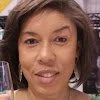
In this conversation, Hira Aftab — founder of Our World Too and a self-described third culture kid — reflects on navigating bias, challenging echo chambers, and finding her voice in spaces that did not always make room for it. This episode invites us to examine the narratives we have normalized — especially the polite ones — and to reconsider what meaningful inclusion truly requires.
Transcript: Accentuate! Podcast
Host: Rhonda Gardner
Guest: Hira Aftab, Social Impact Communications Consultant and Founder of ‘Our World Too.’
This transcript has been edited for readability. Roles and references to events reflect the time of the interview.
Growing up across three countries
Rhonda: Hello, everyone. This is the Accentuate! Podcast, amplifying the voices of immigrants and refugees for success in the workplace. I’m Rhonda Gardner, the host, an immigrant from Trinidad and Tobago living in the US. Today my guest is Hira Aftab. Hira works in the humanitarian field and is the founder and director of Our World Too. Thank you for joining me.
Hira: Thank you so much for having me on your show today.
Rhonda: Can you start by introducing yourself and telling us about your personal background?
Hira: Hi, everyone. I never really know how to answer this question. I identify as a third-culture kid, part of a diaspora across multiple countries. I grew up across Saudi Arabia, Pakistan, and the United Kingdom. I was born in the UK, my parents are from Pakistan, and we moved around a lot because of their jobs.
I founded Our World Too, an organisation dedicated to rehumanising the narrative around refugees and displaced communities through storytelling. I’m also with the British Red Cross as a strategic communications lead for the Diaspora Humanitarian Partnership programme. I’m active in the interfaith and cultural space, and I have two master’s degrees, one in international relations and one in humanitarianism, conflict, and development.
What drew Hira to humanitarian work
Rhonda: Where did the drive behind your career choices and the things you’re passionate about come from?
Hira: It comes from different places. My parents are doctors, and I grew up seeing them help people. I realised early that medicine wasn’t for me, but I wanted to help people in some way. I came across the humanitarian sector in the final years of my bachelor’s degree. I learned about the United Nations and its work and decided that was where I wanted to go with my career.
A few things led me to found Our World Too. I’d felt overlooked in the traditional humanitarian sector and seen how refugees and displaced communities were vilified by academia, the media, and the government. It was also personal. My grandmother was a refugee during the Partition of India and Pakistan. I grew up hearing her stories, which allowed us to see things from her perspective. That had a big impact on how I wanted to shape my career.
Founding ‘Our World Too’
Rhonda: Tell us a little about the work you do now.
Hira: There wasn’t one event that led me to found my own organisation. I’d been noticing the language used since 2015 to describe people seeking sanctuary in Europe and across the world. People made assumptions about why they were here, calling them terrorists or illegal or saying they were coming to change the European way of life. None of that was true. I’d heard my grandmother’s stories and other stories from people who’d been refugees during Partition, so I knew what storytelling could do.
During a trip to a refugee camp in Jordan, we talked to an engineer on a site visit. He was from what I’ll call the Global North, though I don’t like the term. We asked him, “If you’re here trying to make life more comfortable for refugees, why don’t you ask them?” He basically said, “All the good ones are gone.”
It comes down to who gets called a “good refugee” and to that model minority myth. How much do you have to contribute? How much does your net worth have to be for you to matter in society?
I founded Our World Too that night. We started on social media as a way to counter the growing rhetoric in the media, academia, and politics. We wanted to amplify the voices of people who’d lived through displacement so they could tell their stories without other people speaking for them, filtering their words, or assuming why they had to flee.
We’ve had the opportunity to speak with amazing people about their journeys of displacement, from Bosnia, Afghanistan, Palestine, Iran, Chile, and Syria. It’s humbling that they believe in the organisation so much. Growing Our World Too is one of my biggest projects right now.
Why the name matters
Rhonda: I’m learning about the refugee experience, and part of why I wanted to do this was to learn and educate at the same time. I’ve been trying to use “refugee experience” because it describes an experience in people’s lives. You may feel out of place in your family or at the office, but feeling like an outsider in a country or in the world is on a different level. Tell me about the name of your organisation.
Hira: I didn’t want “refugee” specifically in the title. As you said, it’s an experience in people’s lives. It may last longer for some people, and some may identify with the label for a few years or forever.
I wanted a name that said, “Listen, we’re here too, and our voices matter.” Our voices should be centred in policy and when refugees and displaced communities are discussed in the media and academia.
As an immigrant woman and a Muslim woman, people speculate about me. People call you oppressed or ask why you’re in a particular space. I’m here to speak my truth and tell my story. If you don’t like it, I don’t really care. It is our world too. There are other voices beyond the dominant global narrative, and they matter.
Rhonda: Could you talk about what statelessness means to you?
Hira: I’m speaking from my own understanding. To me, it’s about having no state to fall back on, no country to call your own. I think it’s multifaceted. I thought of the case of Shamima Begum in the UK, who was stripped of her nationality. It hasn’t really come up in our conversations, and I don’t want to misrepresent it.
What moving taught her about culture and racism
Rhonda: You said being an immigrant is part of your identity. Tell us about some of the highs and lows of that journey.
Hira: I moved many times. I think I went to ten different schools before I graduated high school. My parents moved around a lot for work. Overall, it was a good experience. I met many people, learned about culture, and became comfortable working in multicultural environments. I credit that with being able to see multiple points of view and listen to people before projecting what I think is right.
In my last two years of high school in Saudi Arabia, I think there were about 40 languages spoken at school. People spoke them freely. I remember someone who was Palestinian teaching us Arabic and us teaching them Urdu. There were people teaching Italian and Spanish too.
There were lows. In Scotland, my siblings and I and one other family were the only people of colour in our school. It wasn’t outright bullying, but there was racism in how people approached you and the assumptions they made. They’d comment on your food or how thick your eyebrows were, something that’s highly prized now but wasn’t back then.
It was hard as a child. Looking back, it helped me grow, but no child should have to go through racism to grow as a person. When people say children are too young to learn about racism, I think, children experience racism. Why shouldn’t they learn about it?
Valuing skills and providing support at work
Rhonda: What does workplace inclusion mean to you as a humanitarian professional and founder? What would you like to see?
Hira: When I started working in the UK, people made assumptions about my background because I’m a Muslim woman who covers. There was a lot of what I’d call diversity hiring, where people didn’t value your skill set. You were there to look good in pictures or so they could say they had someone who fit that category.
There were direct comments about my faith. “How can you believe in this cause if you’re Muslim?” I sat in interviews reciting religious texts to explain why it wasn’t a problem. You stick it out for a while because you need the experience, but it was infuriating. I don’t understand why my background should call into question what I bring to the role. People from different backgrounds can approach a problem from different angles.
My friends and I have talked about applying to charities and being passed over as people of colour for people from the UK or US who had less experience or spoke fewer languages. It’s maddening when you’ve worked so hard doing unpaid internships and building experience and still get passed over.
That’s part of why Our World Too started. It’s a platform for people with lived experience of displacement and people who work with them to be heard, and a way to change how the media portrays events. It gave me space to do work I hadn’t been able to do in the sector and to share that space with other people who were overlooked and underrepresented.
Inclusion means valuing people’s differences, respecting them, understanding that people may need different levels of support, and giving people flexibility in how they work. If you hire people with lived experience of displacement who may have trauma from their past, the workplace should offer support. You can’t ask for lived experience without providing that support.
At the British Red Cross, I’ve seen active steps to ask communities how they want to be seen and what messaging they want. It’s the first organisation I’ve worked for where I’ve seen that kind of effort, and I feel it’s going in a positive direction.
Reaching people beyond the humanitarian sector
Rhonda: As a communications professional, what have you learned about reaching the wider public with stories of people who’ve experienced displacement?
Hira: When you work in the humanitarian sector, or any particular sector, you often end up talking to people already doing that work. It’s hard to break out of that because you know they’ll respond. You’ll get engagement and views.
The challenge for me has been reaching people who don’t know about these issues or generally interact with communities with lived experience of displacement. Moving a lot and being a third-culture kid helped immensely. I’ve reached out to contacts from Saudi Arabia and Pakistan to share things happening in the UK, information about the Bosnian genocide, and stories on our website with communities who wouldn’t normally see them.
It’s about finding avenues and connections. If you know someone who would be good for a storytelling opportunity, share it and ask if they’d like to go. You have to be creative. To reach people outside your area of work, go where they are or communicate in a way that will reach them.
Learning through interfaith work
Rhonda: You also mentioned interfaith initiatives. I saw a LinkedIn post about an event you attended. Can you tell me about that?
Hira: It was through an organisation [name unclear in the supplied transcript] that puts together interfaith and peacebuilding forums for people aged 18 to 35. I was invited back as a fellow after delivering an activity last year about the dangers of hate speech in people’s native languages. I spoke about Our World Too and the Bosnian genocide, and talked to participants about project planning.
My work there is about coming together and looking beyond the rhetoric to see what communities have in common. It’s been incredible to learn from people in the interfaith space and see how we can work together on climate change, displacement, and migration. I have a lot of room to grow in that area, and I’m excited to see where it takes me.
Earning trust and facing backlash
Rhonda: What’s been your greatest accomplishment with Our World Too, and where have you faced challenges?
Hira: The greatest accomplishment is when people with lived experience of displacement see value in what we’re doing and trust us enough to tell their stories. They trust us to use them in a way that represents their journeys fairly. Our World Too wouldn’t exist without them and their trust in the platform.
Reaching new audiences is still a challenge. There’s backlash sometimes. We receive direct messages accusing refugees of coming to steal or calling them illegal. I see that as a consequence of rhetoric from the media and government that vilifies people.
I’d just read about something described as “migrant hunting” in the UK, where people were going to hotels housing refugees and asylum seekers and harassing them. These are people who may have escaped persecution and still hadn’t found safety in a country that prides itself on upholding human rights.
Breaking down those divisions is an ongoing struggle. We’re a small organisation, and we don’t receive funding. Much of it comes from personal initiative and work outside our regular jobs. It’s been hard, but I’m motivated to see it through, and I hope we continue to grow.
Recognising dehumanising language at work
Rhonda: You mentioned hate speech in another context. We tend to assume people will be professional at work. Have you heard hate speech in the workplace, and what does it sound like there?
Hira: For me, it’s the comfort people have with dehumanising someone else. In the humanitarian sector, we talk about “beneficiaries.” They’re people with lives and skills, and they can contribute to the sector just as much as we can.
I’ve heard comments directed at certain communities. One person who’d been a peacekeeper in Rwanda said, to paraphrase, that he used to sit on the balcony and laugh as Hutu and Tutsi people killed each other because he couldn’t understand why they were fighting. I thought, “What are you doing in this sector?”
At another charity, a colleague was interviewing a Tanzanian woman who was very accomplished in her field. She wasn’t giving the answers he wanted, so he kept asking if she understood the words he was saying or the English he was using. She clearly understood him. When I asked her questions on another topic, she was receptive and open, and we had an engaging conversation.
It’s those biases and the ease with which people talk about another group with distaste. Laughing at people while they’re dying is hate speech to me. It can also be microaggressions or preconceived ideas about certain communities. Those are important to address alongside more overt hate speech.
Finding your footing in a new workplace
Rhonda: What advice would you give immigrants or people with a refugee experience who are entering a workplace, whether they’re junior, mid-career, or senior? How can they adjust and hold on to who they are?
Hira: It depends on the organisation. I’ll be the first to admit it’s hard to enter a workplace in a new country. You don’t know the processes, the laws, or your rights. Start there. Read up on the basics and read your contract. Make sure you’re comfortable with what it says. If something concerns you, communicate it clearly.
When decisions are made about probation or other matters you discuss with your manager, get them in writing, such as in an email. I’ve had a probation-related experience where something was said verbally and I didn’t have it in writing [the outcome is unclear in the supplied transcript].
If your organisation has learning platforms that teach you about the company culture and what’s expected, use them. Join networks if there are any. There may be a youth network, one for people of colour, or one for women in leadership. When you’re more comfortable, talk to people in similar positions. You can say, “I’m new and I’d like to learn more. Would you mind mentoring me?” The people I’ve approached have been open and happy to share their journeys.
Every culture has a way of working. I mix styles from Pakistan, Saudi Arabia, and the UK. In my experience, in a good workplace, if the work gets done and you can explain why you did something a certain way, people often don’t mind. You can say, “Where I come from, this is how we do this and why.” What matters is reaching the outcome you agreed on.
If you have questions, ask. If you think something is wrong, address it professionally. Make sure your voice is heard. Usually, a problem can only be addressed when someone knows it’s there.
Taking credit for your contribution
Rhonda: Is there anything else you’d like to share or reiterate?
Hira: Something I learned, especially as a woman of colour and a Muslim woman who covers, is to own your work. I understand teamwork and wanting a good outcome. But if you’ve worked really hard on a programme and someone tries to take credit for it, raise it with your manager or someone else. Say, “This was my work.”
The company gets credit for the outcome. You should also get credit for what you did. As women of colour, we’ve had people take credit for our work. There are movies about it, and it still happens in the workplace. Don’t be afraid to have your voice heard. Give credit where it’s due, including to yourself. These are your accomplishments, and you should be able to leave a job proud of what you’ve done.
Rhonda: That’s important. It happens often, and sometimes we shrink back out of shame or shock. Thank you for sharing that and for taking the time to speak with me, Hira. I hope we stay in contact. I’m here to amplify the voices of immigrants and people who have had a refugee experience, so people can hear from us about who we are and what we’re here to contribute.
Hira: Thank you so much for having me.
Are you an Immigrant or Refugee interested in sharing your story? Let us know here.
Connect with Hira Aftab on LinkedIn.
Follow Accentuate! on LinkedIn.
Interested in developing your leadership potential or strengthening your effectiveness across cultures?
Explore ACCENTUATE!'s Career & Leadership Coaching, Hogan Assessments, and Cultural Intelligence (CQ) Assessments and Coaching.
Click Get Started to learn more.